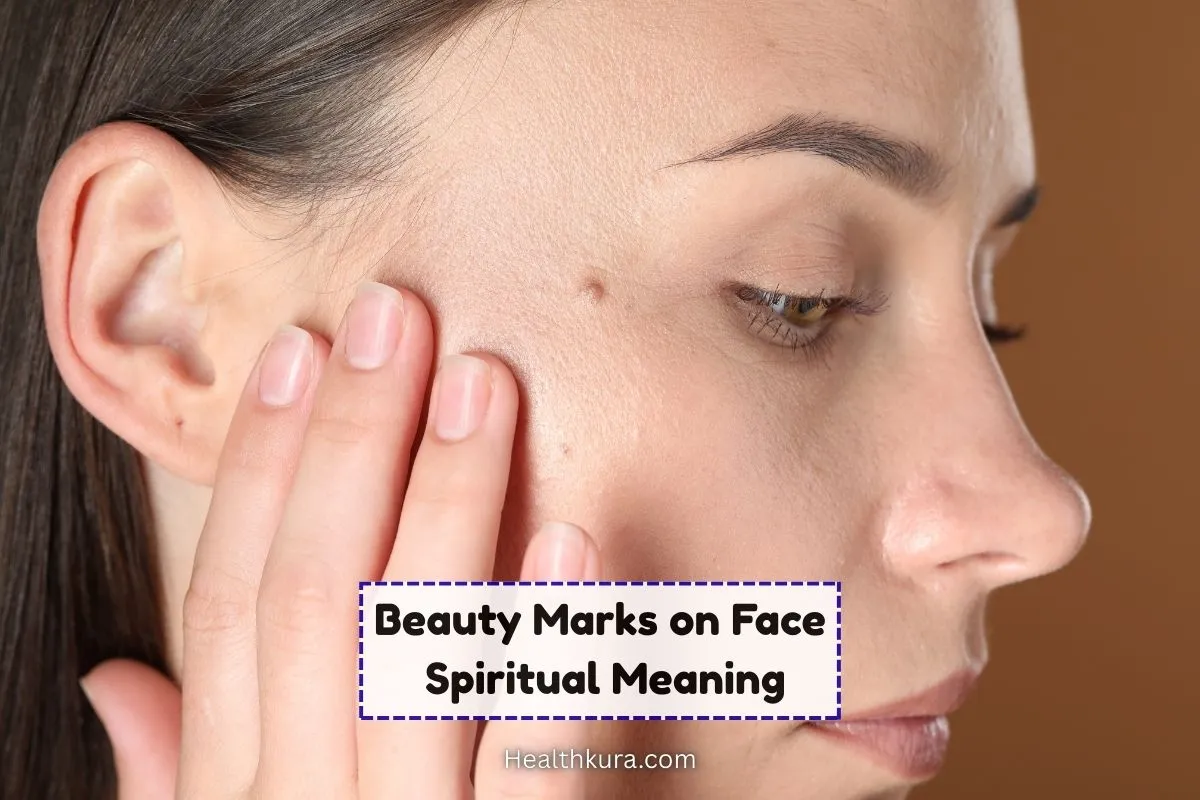
A small, dark mark on the skin, often called a beauty mark, can be more than just a physical feature. Throughout history and across different cultures, these spots have been seen as symbols with deep spiritual significance. People have long believed that the placement of a beauty mark on the face can reveal secrets about a person’s character, destiny, and even past lives.
This blog post explores the fascinating world of facial beauty marks. We will look into their spiritual meanings, what they symbolize based on their location, and how different cultures interpret them.
By the end, you will have a richer appreciation for these unique markings and what they might say about you or the people you know.
What is a Beauty Mark?
From a medical perspective, a beauty mark is simply a type of mole, which is a common skin growth. These spots, technically known as melanocytic nevi, are clusters of pigment-producing cells called melanocytes. They can appear anywhere on the body, but when they are on the face, they are often referred to as beauty marks or beauty spots.
Historically, the term “beauty mark” became popular in the 18th century when European aristocrats used artificial spots, known as “mouches,” to enhance their features and convey subtle messages in social settings.
However, the fascination with natural marks goes back much further, with many traditions viewing them as signs from the divine.
Other Names of Beauty Marks
Beauty marks are also called:

- beauty spots,
- beauty moles,
- lentigos, and
- nevi
What Does a Beauty Mark on the Face Symbolize?
A beauty mark on the face is often seen as a symbol of uniqueness and individuality. In a world where many strive to fit in, a beauty mark sets a person apart. It is a natural marking that distinguishes you from others, often associated with charisma and charm.
Moreover, these spots are frequently linked to destiny and fortune. Depending on their placement, they can be seen as indicators of wealth, wisdom, love, or challenges. This belief stems from ancient practices like face reading, which suggests that every feature of the face holds clues to our life’s path.
The symbolism of a beauty mark is a blend of cultural beliefs, historical trends, and personal interpretation. It can be a simple freckle or a profound symbol of your life’s journey.
9 Spiritual Meanings of Beauty Marks on the Face
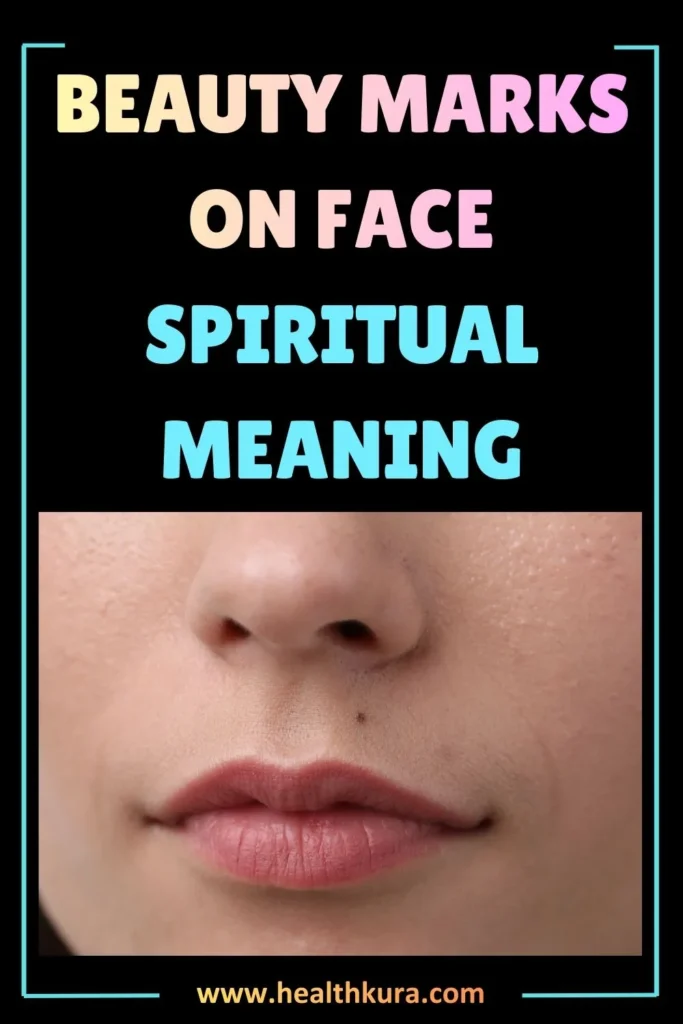
Spiritually, beauty marks are often seen as more than just random occurrences. They are believed to be celestial imprints that carry messages from the spiritual realm.
1) Physical and Spiritual Uniqueness
This perspective beautifully merges the scientific with the symbolic to celebrate human individuality. On one hand, a beauty mark is a straightforward dermatological phenomenon, a clustering of pigment cells.
On a deeper level, it is revered as a distinctive emblem of the soul. It proclaims that the person is an original creation, possessing a one-of-a-kind combination of experiences, gifts, and purposes.
This mark affirms their value and confirms that they have a specific and irreplaceable role to play in the world. It is a natural badge of honor for their singular journey.

2) Divine Protection and God’s Love
This interpretation positions a beauty mark as a celestial seal of approval. It is viewed not as a random blemish but as an intentional imprint. This mark signifies that the individual is a chosen vessel, uniquely crafted and set apart for a significant life purpose.
The presence of this spot serves as a constant, physical reminder that they walk under a protective canopy of divine grace. It encourages the bearer to have faith in their journey, knowing they are guided and sheltered through all of life’s challenges.
This belief fosters a deep sense of security and self-worth, anchoring the person in the knowledge that they are profoundly loved and watched over.
3) Symbol of Wisdom and Diligence
A beauty mark on the forehead acts as a public emblem of a powerful intellect and a resilient character. Its specific placement offers a more granular analysis of this inherent wisdom. A mark directly in the center, for example, points to a person with immense foresight and the ability to perceive profound truths.
Alternatively, a mark on the right side suggests a diplomatic nature and a talent for building harmonious partnerships. A mark on the left side, however, often indicates a person whose wisdom is forged in the fires of personal adversity, making them exceptionally strong and insightful. This mark is a testament to their diligent spirit and cognitive strength.
4) Prosperity and Leadership
Beauty marks framing the eyebrow area are powerful indicators of a person’s potential for material and influential success. They signal an innate capacity for managing responsibility and commanding respect. A person with such a mark often naturally ascends to leadership roles, demonstrating both authority and a nurturing concern for those they lead.
This promise of prosperity extends beyond mere financial gain to encompass a rich and fulfilling family life. The precise location refines whether this leadership is expressed through assertive action or strategic planning, painting a picture of a destined path filled with abundance and influence.
5) Reflection of Past-Life Connections
Within certain spiritual frameworks, a beauty mark is perceived as a karmic signature carried over from a previous incarnation. It is thought to be a permanent record of a significant event, a deep bond, or even a wound that marked the soul.
This mark signifies that the lessons from that past experience are crucial for the individual’s current evolution. It serves as a mysterious clue, prompting introspection about recurring patterns or unexplained affinities in one’s life.
Understanding this connection can provide clarity and purpose, as the mark becomes a guide for resolving old karmic debts and fulfilling one’s soul’s mission.
6) Attraction and Enchanting Beauty
Universally, a beauty mark is celebrated as a focal point that dramatically enhances physical appeal. It operates as a strategic highlight, drawing the observer’s gaze to a specific, often expressive, part of the face.
This deliberate focus can create an illusion of youthfulness and vitality by subtly distracting from other features. The mark bestows upon its bearer a distinct and memorable charm, setting them apart in a crowd. It is not merely a mark of beauty but an active component of it, contributing to a magnetic and captivating presence that others find irresistible.
7) Spiritual Guidance Indicator
This meaning assigns the beauty mark a role as a physical antenna for metaphysical guidance. It suggests the individual has a strong, active connection to a benevolent guide, an ascended master, or a wise ancestral spirit.
The mark symbolizes a conduit through which wisdom, intuition, and protective energies are channeled. It is an external sign of internally received knowledge, helping the person navigate complex decisions and life paths with a confidence that seems to come from beyond themselves. This belief empowers the individual to trust their instincts and the subtle whispers of guidance they receive.

8) Luck and Blessings
A beauty mark is frequently regarded as a literal lucky charm, a permanent token of good fortune etched onto the skin. It is seen as a concentration of positive energy and benevolent forces that actively work in the person’s favor.
This belief is so potent that a folk tradition has emerged around it: to kiss a beauty mark is to activate its luck, showering blessings upon both the bearer and the person who kisses it.
Therefore, the mark is not a passive symbol but an active generator of serendipity, attracting favorable circumstances and opportunities throughout the person’s life.
9) Personal Traits and Destiny
Every beauty mark serves as a unique coordinate on the map of one’s character and fate. Practitioners of face reading analyze the exact location, shape, and even color of the mark to decode its message. A mark near the lip might indicate eloquence and a love for pleasure, while one on the cheek could speak of a resilient and hardworking nature.
This practice provides a highly personalized blueprint, offering insights into innate talents, potential challenges, and the overarching narrative of the individual’s destined path. It is a tool for profound self-discovery.
Meaning of Beauty Marks on Different Locations of Your Face
The specific location of a beauty mark on the face is crucial in determining its meaning. Chinese and Vedic face reading traditions offer detailed interpretations for marks in different areas.
| Location on Face | Spiritual Meaning and Interpretation |
|---|---|
| Forehead | Wisdom and Prosperity. A mark in the center of the forehead indicates wisdom, clear insight, and a rebellious spirit. If it’s on the right side, it signifies wealth, while on the left, it may suggest a life with ups and downs. |
| Eyebrow | Intelligence and Creativity. A beauty mark hidden in an eyebrow is a sign of great intelligence and creativity. It is often called a “hidden gem” and suggests hidden talents and wealth. A mark above the eyebrow points to a steady flow of income. |
| Near the Eye | Emotional and Romantic. A mark under the eye, known as a “teardrop mole,” often signifies a person who is highly emotional and may face sadness in relationships. A mark on the outer corner of the eye suggests popularity and attractiveness. |
| On the Nose | Impulsivity and Passion. A mark on the tip of the nose indicates a quick temper and impulsive nature. These individuals are passionate but may struggle with self-control. A mark on the side of the nose can signify financial struggles. |
| On the Cheek | Courage and Honesty. A beauty mark on the cheek suggests a courageous, sincere, and diligent person. If it’s on the right cheek, the person is sensitive and caring. On the left cheek, they might be seen as introverted and a bit arrogant. |
| Near the Mouth | Eloquence and Fortune. A mark above the upper lip indicates a person who is charming, eloquent, and enjoys the finer things in life. A mark below the lower lip suggests that their children will be successful. |
| On the Chin | Determination and Stubbornness. A mark on the chin signifies tenacity, determination, and a stubborn streak. These individuals are persistent and often achieve their goals through sheer willpower. They may also love to travel. |
| On the Ear | Good Fortune and Reputation. A beauty mark on the earlobe is a sign of good fortune and a long life. It also suggests a good reputation and a kind-hearted nature. A mark on the top of the ear indicates high intelligence. |
Is There Any Biblical Meaning of a Beauty Mark?
The Bible does not explicitly mention beauty marks or moles in the way modern spiritual practices do. However, it does contain passages that can be interpreted in relation to physical marks and their significance.

One relevant concept is the “mark of Cain.” In the book of Genesis, after Cain murders his brother Abel, God places a mark on him. The verse states:
“And the Lord said unto him, Therefore whosoever slayeth Cain, vengeance shall be taken on him sevenfold. And the Lord set a mark upon Cain, lest any finding him should kill him.” (Genesis 4:15, KJV)
This mark was a sign of both divine judgment and protection. It set Cain apart and served as a warning to others. While this is a negative context, it establishes the idea that God can place marks on individuals for a specific purpose.
In a more positive light, some Christians might view a beauty mark as a sign of being fearfully and wonderfully made by God. The book of Psalms celebrates the intricate creation of the human body:
“I will praise thee; for I am fearfully and wonderfully made: marvellous are thy works; and that my soul knoweth right well.” (Psalm 139:14, KJV)
From this perspective, a beauty mark is not a random flaw but a unique part of God’s design. It is a feature that contributes to a person’s individuality, created with purpose and intention by a loving Creator. Consequently, it can be seen as a special touch that makes a person distinct in the eyes of God.
Myths and Superstitions
Over the centuries, numerous myths and superstitions have surrounded beauty marks. In medieval Europe, for example, certain moles were considered “witch’s marks” or “devil’s marks,” believed to be a spot where the devil had branded his followers. Women with unusual marks were often accused of witchcraft, leading to tragic consequences during the witch trials.

Conversely, in 17th and 18th-century France, artificial beauty marks, or “mouches,” became a high-fashion accessory. These small patches of silk or velvet were used to draw attention to certain features and even to send secret messages. The placement was a form of code. A patch near the eye meant passion, one on the cheek signified flirtatiousness, and one near the lips was an invitation for a kiss.
Cultural, Religious, and Astrological Significance
The meaning of beauty marks varies greatly across different cultures and belief systems.
Cultural Significance
In Chinese culture, the art of face reading (Mian Xiang) provides one of the most detailed systems for interpreting moles. The face is seen as a map of a person’s life, with each area corresponding to a different age and life aspect. A well-placed, dark, and small mole is generally considered auspicious, while a large, dull, or awkwardly placed mole can be a bad omen.
In Nepalese and Indian culture, beauty marks (known as ’til’) are also significant. They are often associated with beauty and fortune. A mole on a woman’s left cheek is considered a sign of beauty, while one on the chin can indicate a wealthy life.
Religious Significance
Within Hinduism, moles are interpreted based on Vedic astrology. Their meaning depends on their location, size, and shape. They are often linked to the influence of planets and past life karma. A prominent mole might be seen as a sign of a strong planetary influence in a person’s horoscope.
Astrological Significance
In Western astrology, moles are sometimes linked to the zodiac signs and planets. For instance, a mole on the forehead might be associated with Aries, the sign that rules the head. This connection suggests that the traits of the sign or ruling planet might be amplified in the person’s life. Astrologers may consider the placement of moles when reading a birth chart to gain deeper insights into a person’s character and destiny.
Is It Good Luck to Have Beauty Marks on Your Face?
Whether a beauty mark is a sign of good luck depends entirely on the belief system you follow and the specific location of the mark.

According to Chinese face reading, some marks are extremely lucky. A mole hidden within the eyebrow, for example, is considered a sign of hidden treasure and suggests you will have wealth and success. A mole on the earlobe is also very auspicious, indicating good fortune, a long life, and a compassionate personality.
However, not all marks are seen as positive. A “teardrop mole” directly under the eye is often believed to portend sadness and relationship troubles. Similarly, a mole on the bridge of the nose may signify obstacles in life and career.
Ultimately, the idea of luck is subjective. Many people choose to see their beauty marks as symbols of their unique identity rather than as predictors of their fate. They are a part of what makes you, you. You have the power to define its meaning for yourself.
Final Thoughts
Beauty marks are far more than just spots on the skin. They are rich with history, symbolism, and spiritual meaning. From being seen as kisses from angels to markers of past lives, these small features carry profound stories. They remind us that our bodies are canvases, reflecting our inner selves, our journeys, and our connections to the universe.
By understanding the diverse interpretations of beauty marks, we can gain a deeper appreciation for our own unique features and the stories they might tell. Whether you see your beauty mark as a sign of destiny or simply a part of your appearance, it is a distinctive element of your personal narrative.