The sun has always been more than a bright light in the sky. For countless generations, it has been seen as a source of life, power, and inspiration. Its steady presence in our daily lives has made it a central figure in religion, mythology, and art across the world.
From the first rays of dawn to the glowing warmth of sunset, people have looked to the sun for guidance and meaning. It is a reminder that life moves in cycles—bringing light after darkness and growth after stillness. By exploring its spiritual meaning, symbolism, and health significance, we can understand why the sun continues to be such an important part of human life.
The Sun in Spiritual Beliefs
For ancient people, the sun wasn’t only about heat and light—it was a sacred presence. Many believed it was a divine being, watching over the earth and keeping life alive. Civilizations such as the Egyptians saw it as Ra, the Sun God, who ruled the heavens and gave energy to all living things.
The daily rise and set of the sun became symbols of life’s eternal cycle—birth, death, and rebirth. When the sun appeared in the morning, it felt like hope returning to the world. Spiritual teachers often compared the light of the sun to wisdom and truth, because it reveals what is hidden and removes darkness.
Even in modern spiritual practices, the sun represents positivity, vitality, and awakening. Many people choose sunrise for prayer, meditation, or yoga, believing that this time carries special energy for new beginnings.
Symbolism of the Sun Across Cultures
The sun’s meaning changes slightly from culture to culture, but one thing is constant—it is almost always linked to life, strength, and divine order.
| Culture | Spiritual Symbolism |
|---|---|
| Ancient Egypt | Ra – giver of life, ruler of the skies, guide of souls |
| Hinduism | Surya – source of light, health, and spiritual energy |
| Native American | Sacred guardian bringing growth and harmony |
| Japanese Shinto | Amaterasu – goddess of the sun, symbol of peace |
| Aztec Civilization | Tonatiuh – keeper of cosmic balance and time |
In Egypt, temples were built to align with the sun’s path, marking important dates of planting and harvest. In Hindu traditions, offerings are made to Surya at sunrise to seek health and prosperity. For the Japanese, Amaterasu is not just a goddess, but also a symbol of unity and national identity.

These cultural views show that the sun is more than a star—it is a spiritual bridge between humans and the divine. Whether in sacred stories, seasonal festivals, or daily rituals, it stands as a sign of life’s rhythm and cosmic harmony.
7 Spiritual Meanings of the Sun from a Health Perspective
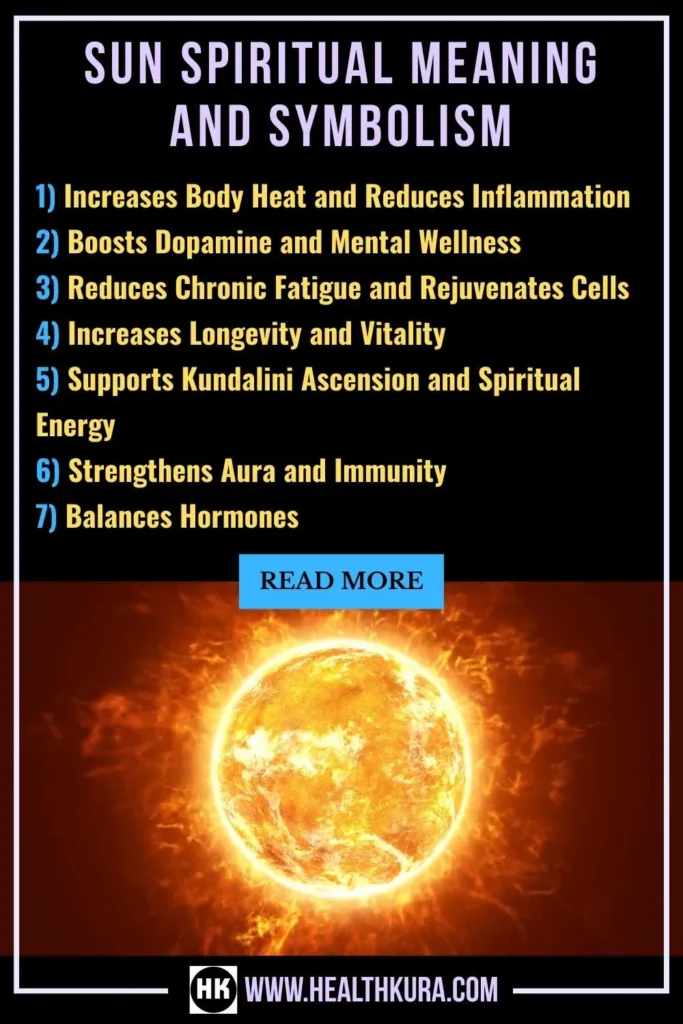
1. Increases Body Heat and Reduces Inflammation
When you step into gentle sunlight, your body naturally absorbs warmth, which does more than just make you feel comfortable. This heat improves blood flow, helping oxygen and nutrients move more easily to the body’s tissues. Better circulation supports healing, reduces muscle stiffness, and allows the body to release built-up tension.
On a deeper level, sunlight works almost like a natural detoxifier. Many traditional healing systems teach that the sun’s warmth burns away toxins in both the physical body and the subtle energy body. By gently raising the body’s core temperature, sunlight helps neutralize inflammation—often linked to chronic pain, joint stiffness, and certain long-term illnesses.
Spiritually, this process is seen as the sun’s purifying touch. Just as sunlight clears the morning mist, it is believed to clear energy blockages and create space for better health. While modern medicine offers many treatments for inflammation, safe exposure to the sun provides a healing effect that is deeply connected to nature’s own rhythm.
2. Boosts Dopamine and Mental Wellness
Sunlight directly influences the brain’s production of dopamine, a neurotransmitter that plays a key role in mood, motivation, and focus. Higher dopamine levels are linked to feelings of happiness, creativity, and a greater ability to handle stress. This is why spending time in sunlight often leaves you feeling more alive and inspired.
Scientifically, the sun’s rays affect areas of the brain like the hypothalamus, which regulates not only mood but also energy balance and hormonal activity. People who don’t get enough sunlight, especially during winter months, are more prone to Seasonal Affective Disorder (SAD), a form of depression caused by reduced exposure to daylight.
From a spiritual perspective, this boost in dopamine is often seen as the sun’s way of lifting the human spirit. When the mind feels lighter and more optimistic, it’s easier to focus on personal growth, spiritual practices, and positive actions. Many ancient cultures believed that sunlight didn’t just brighten the earth—it also brightened the soul.

3. Reduces Chronic Fatigue and Rejuvenates Cells
One of the most profound effects of sunlight is its ability to recharge the body at a cellular level. Sunlight stimulates the production of ATP (adenosine triphosphate), the molecule that fuels nearly every function in the body. When ATP levels rise, energy flows more freely, leaving you feeling refreshed and capable of handling daily challenges with more strength.
In ancient spiritual traditions, sunlight was often called “prana” or “life energy,” and it was believed that this energy could be absorbed directly through the skin and eyes (in safe, controlled exposure). This life energy nourishes not only the physical body but also the mind and spirit, creating a sense of wholeness and vitality.
For those struggling with chronic fatigue, regular safe sunlight exposure can work like a natural energy therapy. It gently reactivates tired cells, supports the body’s repair processes, and helps restore a healthy rhythm of activity and rest. Spiritually, this is seen as a renewal of both inner and outer strength, reminding us that the sun’s energy is a direct gift for sustaining life.
4. Increases Longevity and Vitality
Across cultures, the sun has been associated with youthfulness, vigor, and a longer life. Regular exposure to gentle morning sunlight stimulates the body’s natural systems, improving cell repair, boosting metabolism, and supporting healthy organ function. These processes slow down signs of aging and help maintain a youthful level of energy well into later years.
From a scientific view, the vitamin D produced by sunlight plays a role in preventing age-related diseases like osteoporosis, heart problems, and weakened immunity. Stronger bones, a resilient heart, and a healthy immune system all contribute to an extended and more active life.
Spiritually, the sun is seen as a direct source of life force energy, often called chi or prana. This life force, when replenished daily, strengthens vitality and renews the spirit, giving a sense of purpose and joy in living. Ancient health traditions often encouraged people to greet the sun at dawn, believing that this specific time carried the purest form of healing energy.
5. Supports Kundalini Ascension and Spiritual Energy
In yogic philosophy, sunlight has a powerful effect on ojas—a subtle essence that sustains vitality, immunity, and mental clarity. Ojas is considered the fuel for Kundalini energy, a dormant spiritual force believed to rest at the base of the spine. When this energy awakens and rises through the body’s chakras, it can lead to higher states of awareness and deep spiritual transformation.

Exposure to sunlight, especially during sunrise, is thought to activate and align the chakras, clearing energy blockages that prevent Kundalini from flowing freely. This is why many meditation and yoga practitioners face the rising sun while practicing breathing techniques or chanting mantras.
From a spiritual health perspective, this process is not only about enlightenment—it also strengthens the body and mind. As Kundalini rises, practitioners often report improved concentration, emotional stability, and an increased sense of connection to the universe. The sun acts as both a physical and spiritual catalyst in this transformative process.
6. Strengthens Aura and Immunity
The aura—an energy field surrounding the body—is believed to act as a protective shield against negative influences. Sunlight is thought to cleanse and strengthen this energetic shield, making it harder for stress, illness, or harmful energies to affect you. This spiritual protection works hand in hand with physical immunity.
Scientifically, sunlight boosts the production of white blood cells, which are the body’s main defense against infections. It also stimulates vitamin D synthesis, which plays a crucial role in immune regulation. When immunity is strong, the body can resist illness and recover faster from health challenges.
In many spiritual traditions, a strong aura is a sign of health, vitality, and harmony. Spending time in natural sunlight is one of the simplest ways to recharge this protective field, helping both the body and energy system function at their best.
7. Balances Hormones
Sunlight plays a significant role in regulating the endocrine system, which controls hormone production. Exposure to sunlight helps the brain’s pineal gland and hypothalamus release the right amount of hormones needed for balance and vitality. In men, this can mean increased testosterone, supporting muscle health, energy, and focus. In women, it helps balance estrogen, which is essential for emotional stability, reproductive health, and overall wellness.
From a spiritual viewpoint, balanced hormones also mean balanced masculine and feminine energies within the body. These energies—often called Shiva and Shakti in yogic philosophy—need to be in harmony for a person to feel complete, creative, and in tune with life’s flow.

When hormones are balanced, people often feel more confident, emotionally steady, and physically capable. Sunlight’s influence on this process connects both scientific health benefits and spiritual energy alignment, making it an essential part of holistic well-being.
Health Significance of Sunlight
The sun is not only a spiritual symbol—it plays a vital role in human health. When sunlight touches our skin, it helps the body produce vitamin D, which is essential for strong bones, a healthy immune system, and even better mood. Without enough sunlight, people may feel tired, have weaker resistance to illness, and sometimes experience depression, especially during darker winter months.
Morning sunlight can also help set the body’s internal clock, known as the circadian rhythm. This rhythm controls sleep patterns, energy levels, and hormone balance. Regular exposure to gentle sunlight in the early hours can improve sleep quality and make you feel more alert during the day.
However, it’s important to remember that too much sun can be harmful. Prolonged exposure without protection may damage the skin and increase the risk of skin cancer. The safest approach is to enjoy sunlight during early mornings or late afternoons, use sunscreen, and wear protective clothing when needed.
Spiritual Practices Involving the Sun
Across different traditions, people have developed rituals and practices to honor the sun and its energy. These practices combine spiritual meaning with physical benefits, creating a balance between body and soul.
- Sun Salutations in Yoga – Known as Surya Namaskar, this is a series of movements done at sunrise to energize the body and calm the mind.
- Sunrise Meditation – Sitting quietly in the morning light helps clear the mind and set intentions for the day.
- Solar Prayer Times – In many faiths, specific prayers are timed with sunrise, midday, and sunset to align with the sun’s position.
- Festivals of Light – Celebrations such as Makar Sankranti in India mark the sun’s shift toward longer days, symbolizing new beginnings.
These activities remind people of the sun’s role in both spiritual connection and daily life. By aligning our routines with the sun’s natural rhythm, we can feel more grounded and energized.
Spiritual Lessons from the Sun
The sun quietly teaches us some of the most valuable lessons in life. Its reliable rise each day is a reminder to keep moving forward, even after difficult times. This consistency is a powerful message about perseverance and renewal.

Its warmth represents generosity and unconditional giving. The sun shines on everyone without asking for anything in return, which inspires ideas of kindness and selflessness. This has made it a symbol of pure, life-giving love in many spiritual paths.
The changing positions of the sun through the year also show that change is natural and necessary. Just as the seasons shift, life has periods of growth and rest, activity and reflection. Recognizing these cycles can help us feel more balanced and connected to the world around us.
Final Thoughts
The spiritual meaning of the sun reaches far beyond its physical warmth and light. It stands for life, growth, truth, and renewal, uniting cultures and beliefs across the world. Its constant presence in the sky mirrors the cycles of life, teaching lessons about persistence, generosity, and change.
At the same time, sunlight supports our physical well-being, boosting mood, strengthening the body, and helping us stay in tune with nature’s timing. By respecting and honoring the sun through safe exposure and meaningful practices, we can nurture both our spiritual journey and our health.
References
- https://www.askanadventistfriend.com/sda-health-message/benefits-of-sunlight/
- https://innergpsgurus.com/spiritual-awakening-and-benefits-of-sunlight/
- https://www.linkedin.com/pulse/significance-sun-according-science-spirituality-religions-ouqqf
- https://www.wisdomlib.org/concept/the-rays-of-the-sun
- http://holisticyou.de/?p=1907&lang=en
- https://www.yogaspirit.com.au/about/blog/spiritual-sunrise-yoga
- https://www.spiritualityhealth.com/blogs/the-present-moment/2017/06/06/kalia-kelmenson-potent-power-sun
- https://tinyrituals.co/blogs/tiny-rituals/sunstone-meaning-healing-properties-everyday-uses