The arrival of a baby is one of the most celebrated events in any family. Across the globe, people have created unique birth rituals and baby traditions that reflect their culture, beliefs, and values. While modern hospitals and healthcare systems have brought similarities in childbirth practices, many communities still preserve customs that have been passed down for generations.
From protective ceremonies to symbolic gifts, each tradition tells a story about the society it comes from. Here are 20 fascinating birth rituals and baby traditions from around the world.
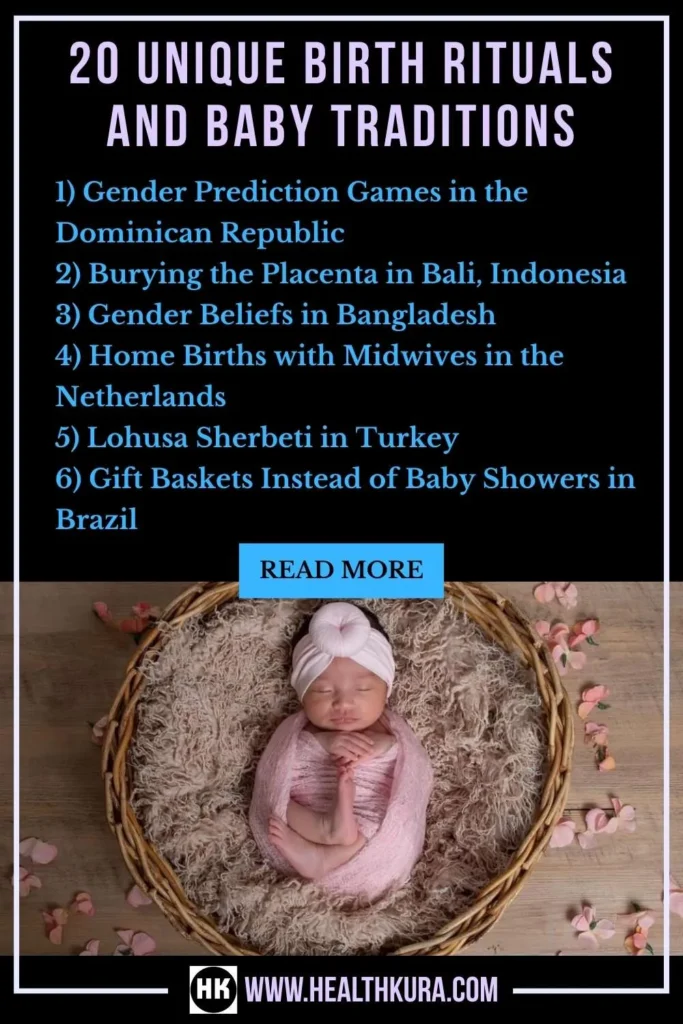
1. Gender Prediction Games in the Dominican Republic
In the Dominican Republic, guessing a baby’s gender is more than a simple guess—it’s a community event filled with suspense and excitement. Families often gather to play the three-chair game, a traditional method of predicting the baby’s gender. The setup is simple but mysterious: under each of the three chairs, someone secretly places either a spoon, knife, or fork. The expectant mother has no idea what’s hidden beneath.
When she sits down, the object under the chosen chair “reveals” the gender. Sitting on the spoon means a girl is on the way, the knife predicts a boy, and the fork means the result remains uncertain. While there’s no scientific proof behind this, it adds a joyful, playful moment to the pregnancy journey.
There’s also a second belief tied to the mother’s hair. Locals say that if a pregnant woman’s hair becomes thick and shiny, she’s expecting a boy. If her hair turns dull or loses volume, it’s thought to be a girl. These beliefs aren’t backed by medical science, but they keep alive an old tradition of storytelling and anticipation within the community.
2. Burying the Placenta in Bali, Indonesia
In Bali, childbirth is surrounded by rituals deeply rooted in Hindu beliefs. One of the most sacred customs is the burial of the placenta, which is seen as more than a biological organ—it’s believed to be a spiritual twin or sibling to the newborn. Right after birth, the placenta is carefully cleaned, placed in a special container, and then buried in the family’s yard during a ritual ceremony filled with prayers, incense, and offerings.
This act symbolizes protection and a lifelong spiritual connection between the child and the earth. The burial spot is often marked and sometimes visited during important family events. It’s believed that treating the placenta with such respect ensures the baby’s future well-being and strengthens their bond with the spiritual world.

Another remarkable Balinese tradition is keeping the newborn’s feet from touching the ground for the first 105 days. Families believe the baby is still closely connected to the divine and must be treated as a sacred being. When the day finally comes for the baby to touch the ground, a joyful ceremony takes place, symbolizing their full arrival into the human world.
3. Gender Beliefs in Bangladesh
In Bangladesh, some traditional beliefs focus on the mother’s physical appearance during pregnancy as a way to predict the baby’s gender. If a woman’s skin glows with brightness and radiance, she’s thought to be carrying a girl. On the other hand, if she has dark circles under her eyes or her complexion becomes dull, the common belief is that she will have a boy.
These gender-prediction beliefs are passed down through generations, often shared by grandmothers, aunts, and older women in the family. While they are not based on any scientific evidence, they bring a sense of connection between older and younger generations, making pregnancy a shared experience for the whole family.
In rural areas especially, these beliefs remain strong and are often accompanied by other small rituals or dietary suggestions, such as eating certain fruits or avoiding particular foods to influence the baby’s gender. Even though modern ultrasound technology can reveal the gender with accuracy, many families still enjoy keeping these cultural beliefs alive.
4. Home Births with Midwives in the Netherlands
The Netherlands has one of the most unique and trusted home birth systems in the developed world. Here, midwives are not just assistants—they are the main health professionals responsible for guiding mothers through pregnancy, delivery, and postpartum care. Expectant mothers can choose whether to give birth at home or in a hospital, but many opt for home births because they value the intimate and familiar environment.
The Dutch see childbirth as a natural life event rather than a purely medical emergency. Families often prepare their homes in advance, arranging everything for the delivery. Midwives bring necessary medical equipment and are trained to handle emergencies, with hospitals nearby if advanced care is needed.
This approach reflects the country’s emphasis on personal choice and trust in natural birthing methods. It’s also backed by a strong healthcare system that ensures every woman has access to professional care, whether she’s giving birth in her living room or in a maternity ward.

5. Lohusa Sherbeti in Turkey
In Turkey, the arrival of a new baby is celebrated with a sweet and colorful tradition—the serving of lohusa sherbeti. This traditional drink, bright red in color, is made from water, sugar, cinnamon, cloves, and sometimes food coloring. It’s first given to the new mother in the hospital to celebrate the birth and to help boost her milk supply.
Once the mother returns home, lohusa sherbeti is served to family members, friends, and neighbors who come to visit the baby. Sharing this drink symbolizes joy, unity, and the hope for the baby’s healthy future. The vibrant red color is also believed to protect the baby from negative energy or the evil eye.
For the first 20 days after giving birth, Turkish mothers traditionally stay indoors, resting and recovering. This period of confinement is meant to protect both the mother and baby from illness and to give them time to bond. After these days pass, the mother and baby begin visiting relatives and receiving guests, marking a joyful return to social life.
6. Gift Baskets Instead of Baby Showers in Brazil
In Brazil, baby showers are not a common tradition. Instead, the celebration comes after the baby is born, when mothers prepare gift baskets for those who visit them in the hospital. These baskets usually contain small tokens of gratitude such as candy, chocolates, mini souvenirs, and a note written “from the baby” thanking the visitor for coming.
This gesture turns the visit into a warm, two-way exchange, where guests bring their love and best wishes while receiving a keepsake in return. The tradition emphasizes gratitude and hospitality, making the experience memorable for everyone involved.
Another deeply rooted belief in Brazil is dressing newborns in red clothing shortly after birth. This is thought to protect the child from evil spirits and attract good luck. Families often prepare the red outfit in advance, ensuring it’s the first thing the baby wears after leaving the hospital.
7. Ninth-Day Celebrations in Guyana
In Guyana, the ninth day after a baby’s birth holds special cultural importance. Families mark the occasion by inviting close relatives and friends to a celebration filled with food, music, and blessings. Guests often bring meaningful gifts such as sweets, money, or gold bracelets for the newborn, symbolizing prosperity and good fortune.

The ninth day is also significant for the mother. It’s traditionally the day she takes her first bath after childbirth, representing physical and spiritual renewal. Some families also burn the placenta during this time, viewing it as a symbol of the deep and unbreakable bond between mother and child.
This ritual blends practical recovery milestones with symbolic acts, creating a meaningful pause before the family settles into daily life with the new baby.
8. Baby Boxes in Finland
Since the 1930s, the Finnish government has been giving new mothers a baby box—a sturdy cardboard box filled with essential baby items such as clothes, bedding, diapers, a sleeping bag, and a small mattress. The box itself can be used as a safe sleeping space for the newborn during the first months of life.
Originally created to support low-income families, the program was expanded in 1949 to include all mothers, regardless of income. This tradition has been credited with helping Finland achieve one of the lowest infant mortality rates in the world.
Beyond its practicality, the baby box reflects Finland’s belief in equality and the importance of giving every child an equal start in life. It’s a simple but powerful symbol of how a society can show care for its youngest citizens from the very beginning.
9. Omugwa Baby Bathing in Nigeria
In Nigeria’s Yoruba community, the first bath for a newborn is a cherished event known as omugwa. This task is usually carried out by the baby’s grandmother. If she’s unavailable, an aunt or another close female relative takes her place. The act represents the role of the extended family in welcoming and caring for the child.
Omugwa is more than a single event—it’s part of a broader period where the grandmother supports the new mother in her recovery. She helps with daily chores, prepares nutritious meals, and even gives the mother belly massages to help her heal.

The baby also receives blessings during this period, with specific days chosen depending on gender—on the seventh day for girls and on the ninth day for boys. These blessings are meant to ensure a healthy and prosperous life for the child.
10. Legal Naming Rules in Germany
In Germany, the role of midwives is so important that every birth is required by law to have one present. Midwives provide expert care and guidance before, during, and after delivery, making them a trusted part of the birthing process.
Another unique tradition in Germany is the strict naming law. Parents must choose their baby’s name from an official list approved by government offices. If they want to select a name that’s not on the list, they must provide a strong reason and wait for official approval.
This rule is meant to ensure that names are culturally appropriate, easy to pronounce, and clearly identify the child’s gender. While it may seem restrictive to outsiders, many Germans see it as a way to preserve linguistic traditions and avoid unusual or impractical names.
11. The KuddleUp Blanket in the USA
In the United States, one small but surprisingly enduring tradition connects millions of newborns—the KuddleUp blanket. This simple white flannel blanket, decorated with pink and blue stripes, has been used in hospitals across the country for over 60 years. Nearly every baby born in a U.S. hospital has been wrapped in one, making it an unofficial national symbol of newborn care.
The blanket’s popularity began because it was soft, durable, and easy to wash, but over time, it became more than just hospital-issued bedding. Parents often take the blanket home as a keepsake, and it frequently appears in newborn photographs, creating a familiar visual memory for generations.
Its universal use means that even babies born in completely different states—sometimes thousands of miles apart—share this same first wrap. In a way, the KuddleUp blanket has become part of the shared cultural experience of birth in the United States.

12. Paid Maternity Leave in Bulgaria
Bulgaria offers one of the most generous maternity leave policies in the world. Mothers receive one and a half months of fully paid leave before the baby is born, giving them time to prepare physically and emotionally. After birth, they are entitled to two full years of paid leave to care for their child.
If a mother wishes, she can extend her leave for an additional year without pay, and her job will still be waiting for her when she returns. This means Bulgarian mothers can spend up to three years at home with their children without losing employment.
The policy reflects the country’s commitment to supporting families and child development during the earliest years of life. For many parents, this extended time also allows them to establish strong family bonds and create a stable home environment before returning to work.
13. Forty-Day Introduction in Armenia
In Armenia, the birth of a child—especially a boy—is a major family celebration. In rural areas, the arrival is marked with music in the church and decorations of green branches and plants in the home. Greenery represents life, renewal, and the continuation of the family line.
Newborns are traditionally kept at home for 40 days before being introduced to the outside world. This period is believed to protect the baby from illness and ensure they grow stronger before meeting extended family and friends. When the 40 days are over, the child is formally presented to the community, often during a joyful gathering.
Babies also receive special gifts, often in the form of jewelry such as gold medallions, crosses, or other religious symbols. Naming customs are also significant, with the first male child often named after his grandfather, keeping family heritage alive.
14. Silver Coins for Fortune in the UK
In the UK, a traditional way to wish a newborn prosperity is to place a silver coin in the baby’s hand. If the baby grips the coin tightly, it’s believed they will grow up to be careful with money. If they drop it, they are thought to be more generous as adults.

This practice used to be so common that strangers passing a baby in a pram might stop to give them a coin for good luck. While less frequent today, some families still follow the tradition, especially during christenings.
In Irish culture, another related custom involves the couple’s wedding cake. The top tier is soaked in whiskey during the wedding and saved until the baby’s christening. At the ceremony, the cake is sprinkled over the baby’s head for blessings, and the rest is eaten by guests as a symbol of shared joy.
15. Baby Luck Beliefs in China
In Chinese culture, marriage and children are seen as two essential life milestones. Many customs connected to pregnancy begin even before conception. Some couples display posters of chubby baby boys dressed in red near their bed to invite good fortune and increase the chances of having a son.
During pregnancy, traditional diets may be followed, often based on advice from older relatives. Certain foods are believed to improve the baby’s health or influence its gender. After birth, many mothers follow a practice called zuò yuè’zi, or “sitting the month,” where they rest for 30 days and avoid activities that could expose them to cold or strain.
During this month, family members—especially mothers and mothers-in-law—take care of household duties and the newborn, allowing the mother to focus entirely on recovery. While the details of zuò yuè’zi vary across regions, the central belief remains the same: a well-rested mother is better able to care for her child in the long term.
16. Sacred Hair Cutting in India
In many parts of India, babies take part in a sacred ritual called mundan, where their first hair is shaved off. This ceremony usually takes place when the child is between 1 and 3 years old, but in some families, it happens earlier. The act is deeply symbolic—it’s believed to cleanse the child of any negative influences from past lives and mark a fresh start in this one.
The hair is often collected and offered to a temple as part of the blessing process. Families see this as a way of dedicating the child to God and seeking divine protection for their future. The event is usually accompanied by prayers, music, and a small family gathering where relatives bless the baby and offer gifts.

For many, the mundan is also a joyful social event. Families prepare special meals, invite friends, and celebrate the child’s growth and health. While some urban families have moved away from the practice, it remains widely observed in both rural and traditional households.
17. Protective Amulets in Morocco
In Morocco, newborns are often given protective amulets to guard them from harm, especially from the “evil eye,” a belief shared in many Middle Eastern and North African cultures. These charms can be made from silver, blue beads, or Quranic inscriptions, and they may be sewn into the baby’s clothing or hung near their bed.
Alongside the amulet, families sometimes burn incense to purify the space and bring blessings. Relatives recite prayers over the baby, asking for health, protection, and a happy life.
These customs are not only spiritual but also deeply comforting for the family. They give parents a sense of security, knowing that their child is symbolically shielded from negative forces during the delicate early months of life.
18. Swaddling Traditions in Russia
In Russia, swaddling has long been a common way to care for newborns. Babies are wrapped tightly in a cloth or blanket, keeping their arms and legs snug. This is believed to help them feel secure and sleep better, as well as keep them warm during the cold months.
Traditionally, swaddling was done for the first few weeks or even months of life. Many Russian parents also believed it helped the baby grow with straight limbs and good posture. While modern parents sometimes opt for looser wrapping or sleeping sacks, swaddling remains a well-recognized tradition, especially in rural areas.
Beyond the practical side, swaddling has a cultural meaning—it reflects the idea of protecting and nurturing a baby closely until they’re ready to explore the world. It’s one of the oldest baby care practices still seen in modern times.

19. Naming Feast in Ethiopia
In Ethiopia, the naming of a baby is a celebration that brings together the entire community. Known as a naming feast, it often takes place when the baby is about two weeks old. Until this time, the child’s name is usually kept secret, even from close relatives.
The celebration is marked by music, dancing, and a large meal shared among family and friends. The official announcement of the baby’s name is the highlight of the day, followed by blessings from elders and religious leaders.
This gathering is not only about the name—it’s a way to formally introduce the child to the community. It strengthens social bonds and creates a sense of belonging for the baby from the very start of life.
In the Navajo Nation, one of the most joyful milestones in a baby’s life is their first laugh. It’s believed that a newborn’s first laugh marks their transition from the spiritual world into the human community. The moment is so special that it sparks an entire celebration.
The family organizes a first laugh party, inviting relatives and friends to join in. The baby is considered the host of the event, and small gifts or candies are handed out “from” them to the guests. This act is meant to teach generosity from the very start of life.
The tradition reflects the Navajo view that laughter is a vital part of being human. By celebrating it, the community welcomes the child not only into their family but into the shared joy of human connection.
Bonus: Wetting the Baby’s Head in the UK and Ireland
In the UK and Ireland, “wetting the baby’s head” involves whiskey. The wedding cake top is saved and soaked. At christening, it’s sprinkled on the baby. Adults eat the rest.
In addition, this celebrates the milestone. It ties marriage to parenthood. Families enjoy the ritual. The tradition lives on in many places.
Extra Insights: Chinese Sitting the Month
Chinese mothers follow “sitting the month” after birth. They rest fully, avoiding showers and cold. Strict diets aid recovery. Grandparents help with everything.
Moreover, pre-birth diets aim for healthy babies. Calendars with baby images bring luck. Grandparents often raise kids in parks. This shows strong family roles.
These 20 birth rituals and baby traditions reveal how cultures cherish new life differently. From protective customs to community celebrations, each one has a purpose. Learning about them broadens our view of the world. Share your thoughts on these fascinating practices!
Table: Quick Summary of Birth Traditions
| Country/Region | Key Tradition |
|---|---|
| Dominican Republic | Gender prediction with chairs and utensils |
| Bali, Indonesia | Burying placenta; baby not touching ground |
| Bangladesh | Gender based on mother’s appearance |
| Netherlands | Home births with midwives |
| Turkey | Lohusa sherbeti drink |
| Brazil | Gift baskets for visitors |
| Guyana | Ninth-day celebration |
| Finland | Baby box from government |
| Nigeria | Omugwa first bath by grandmother |
| Germany | Official naming rules |
| USA | KuddleUp blanket tradition |
| Bulgaria | Long paid maternity leave |
| Armenia | Forty-day introduction |
| UK | Silver coin in baby’s hand |
| China | Zuò yuè’zi (sitting the month) |
| India | Mundan hair-shaving ceremony |
| Morocco | Protective amulets |
| Russia | Swaddling tradition |
| Ethiopia | Naming feast |
| Navajo (USA) | First laugh party |
Interesting Baby Traditions Around the World
References
- https://www.cwmktg.com/blog/2017/baby
- https://www.themindfulbirthgroup.com/parents/blog/postnatal-rituals-from-around-the-world/
- https://timesofindia.indiatimes.com/life-style/parenting/first-year/jumping-over-the-newborn-and-7-other-weird-baby-traditions-from-around-the-world/photostory/72137585.cms
- https://www.inspirethemind.org/post/birth-beyond-borders-global-pregnancy-birthing-traditions
- https://www.thebump.com/a/birth-traditions-around-the-world
- https://awhonnconnections.org/2015/09/16/birth-traditions-around-the-world/
- https://www.amyjoymistal.com/blog/baby-traditions-around-the-world
- https://www.parentcircle.com/unique-baby-traditions-observed-around-the-world/article
- https://bibsworld.com/en-au/blogs/guides/celebrating-new-life-cultural-traditions-from-around-the-world-to-welcome-babies
- https://mybtoys.com/blog/10-unique-baby-traditions-from-around-the-world/